


I've spent years sourcing and testing towels for the shop, and "Japanese or Turkish?" is the question I get asked most. Here is the honest comparison — no brand loyalty, just how they actually differ.
What is the main difference between Japanese and Turkish towels?
The difference comes down to the weave. Turkish towels are traditionally flat-woven, which makes them thin, light and fast to dry. Japanese towels are usually built with a raised pile or a gauze-and-pile structure, which makes them softer and more absorbent. Almost every other difference — weight, drying time, feel in the hand — follows from that one choice.
What is a Turkish towel?
A Turkish towel, or peshtemal, is flat-woven from long-staple cotton. It starts life thin and slightly crisp, then softens and grows more absorbent after the first few washes. Because there is little pile to hold water, it dries quickly and folds down small. That is why it travels well and doubles as a beach wrap, a picnic layer or a light throw. First-time users sometimes find it less plush than a hotel towel — that is the trade-off for its low weight and fast drying.
What is a Japanese towel?
A Japanese towel is usually made with low-twist cotton yarn, a gauze-and-pile construction, or both. Low-twist yarn traps more air, so the towel feels soft and pulls in water quickly. Gauze-and-pile towels pair a thin gauze layer, which is light and fast-drying, with looped pile, which is soft and absorbent — giving you some of the speed of a flat-weave and the plushness of a terry towel. Our Japanese towels are made in Japan and tested to OEKO-TEX Standard 100.
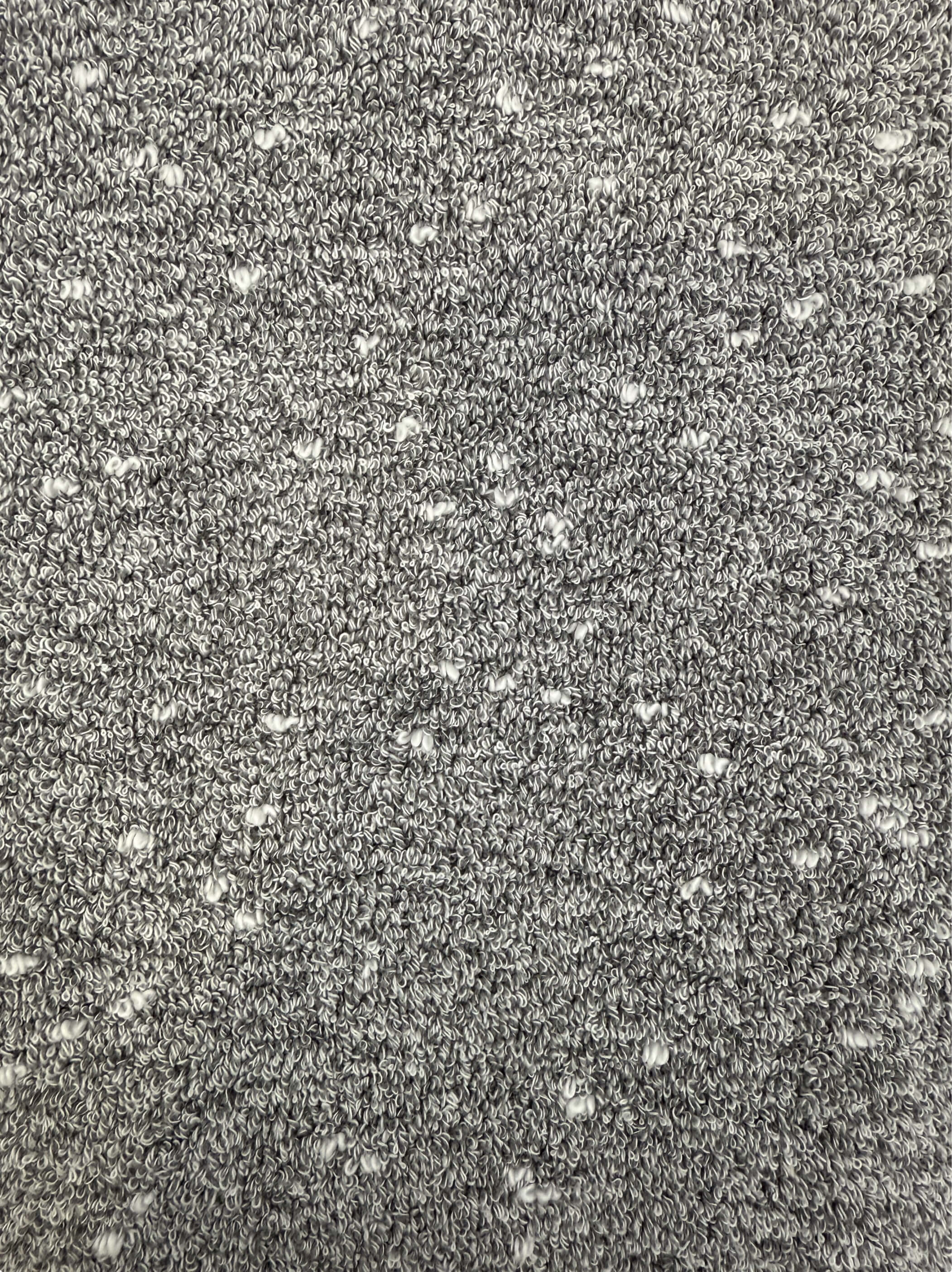
One example is our Kishu Binchotan charcoal towel, where the charcoal is milled into the cotton yarn rather than coated on top, so it stays put through washing.
Which towel is more absorbent, and which dries faster?
These are the two questions people actually care about, and the answers point in opposite directions.
Absorbency. The pile in a Japanese towel holds more water, so it soaks up more per wipe, especially when new. A Turkish towel becomes noticeably more absorbent after the first few washes, once the cotton opens up, but it still holds less water overall.
Drying. A Turkish towel dries fastest, because there is less material to hold moisture — which also means less risk of it staying damp and musty. A Japanese gauze-and-pile towel dries faster than a standard terry towel, but not quite as fast as a thin peshtemal.
Short version: for the quickest-drying towel, Turkish wins. For the most absorbent everyday towel, Japanese wins.
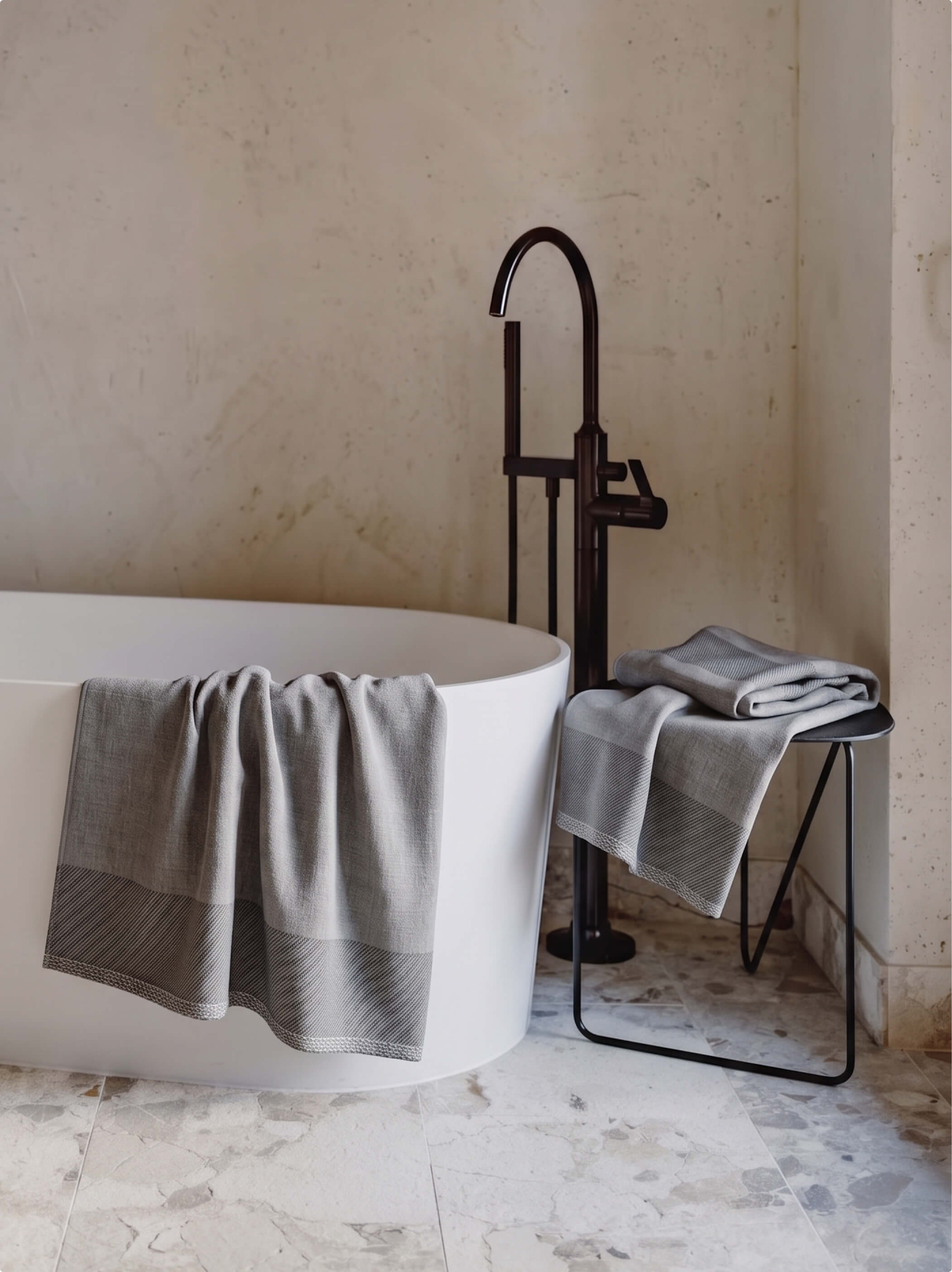
Japanese vs Turkish towels: side by side
| Feature | Turkish (peshtemal) | Japanese (gauze-and-pile) |
|---|---|---|
| Weave | Flat-woven, little or no pile | Low-twist yarn and/or gauze-and-pile |
| Weight | Light and thin | Medium, plusher feel |
| Absorbency | Lower at first, improves with washing | Higher, especially when new |
| Drying speed | Fastest | Fast, slower than peshtemal |
| Softness | Softens over time | Soft from the first use |
| Packs down | Very small | Takes more space |
| Best for | Travel, beach, gym, guest towel | Daily bathroom, softness, absorbency |
Which towel is right for you?
Choose a Turkish towel if you want something light, quick-drying and packable — for the beach, the gym, travel, or a guest towel that stores flat.
Choose a Japanese towel if you want maximum softness and absorbency for everyday use, or if you dislike a towel that feels stiff straight out of the wash. If odour control matters to you, a binchotan charcoal towel is worth a look.
If you can, keep one of each: a peshtemal by the door for the pool bag, and a Japanese towel in the bathroom for every day.
Frequently asked questions
Are Japanese towels better than Turkish towels?
Neither is strictly better. Japanese towels are softer and more absorbent for daily bathroom use. Turkish towels are lighter, quicker-drying and easier to pack for travel or the beach.
Which is more absorbent, Japanese or Turkish towels?
Japanese towels are usually more absorbent, especially when new, because of their pile. Turkish towels become more absorbent after a few washes but hold less water overall.
Do Turkish towels dry faster than Japanese towels?
Yes. A flat-woven Turkish towel has less material to hold moisture, so it dries faster and is less likely to stay damp.
What is a Kishu Binchotan charcoal towel?
It is a Japanese towel woven with cotton yarn that has white charcoal from the Kishu region milled into it. The charcoal is valued for absorbing odours, helping the towel stay fresh between washes.
Can I use a Turkish towel in the bathroom?
Yes. Many people use Turkish towels daily. They feel thinner than a plush terry towel but dry quickly and take up little space, which suits small bathrooms.


 INT
INT
 EU
EU
 PL
PL
 DE
DE
 ES
ES
 LT
LT
 CY
CY
 LV
LV
 EE
EE